
ATTENTION: high performers
Stop guessing what’s driving anxiety, focus issues, or performance plateaus.
Start with a qEEG brain map, then follow a targeted neurofeedback plan designed around your brain’s “hot spots.”
Results vary by person. This is not a diagnosis or a guarantee of outcomes.
What qEEG-Guided Neurofeedback is
(in plain English)
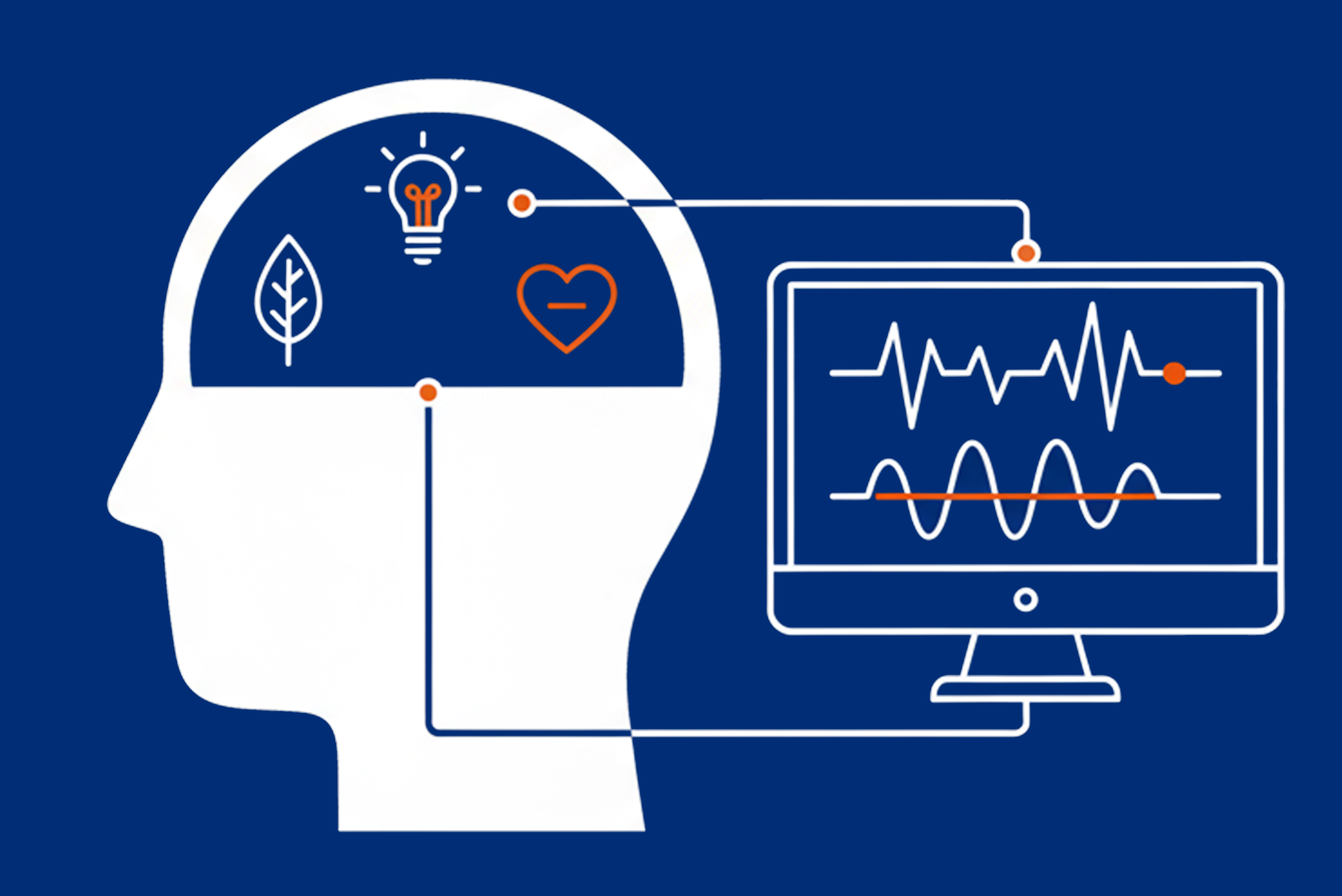
qEEG shows where your brain is over- or under-activated—often the “hot spots” linked with anxiety arousal, attention control, sleep disruption, or stress reactivity.
Neurofeedback is training: your brain gets real-time feedback and gradually learns more stable patterns—like building self-regulation, not forcing it.

Map:
qEEG brain data

Guide:
protocol built from your map

Train:
sessions that reinforce healthy patterns
Ready to get started?
Common reasons people start neurofeedback with us
Anxiety / stress overload
(racing mind, tension, shutdown, panic patterns)
ADHD / focus & follow-through
(task initiation, distractibility, mental fatigue)
Performance & resilience
(focus under pressure, faster recovery between tasks)
Sleep & nervous system regulation
(winding down, staying asleep, waking refreshed)
What changes when the brain can self-regulate better
Calmer body response under stress (less “wired” or reactive)
Better sustained attention and fewer “mental crashes”
Improved sleep depth and easier winding down
More consistency: fewer extreme good or bad days
Outcomes vary. We track goals and adjust protocols based on response.
What research says about neurofeedback for anxiety & performance
Neurofeedback research is active and results depend on protocol quality, targeting, and the population studied. That said, published studies and reviews report benefits in areas like anxiety symptoms and performance-related outcomes.
A study evaluating EEG neurofeedback for anxiety relief reported symptom improvements in participants with anxiety disorders. -PubMed Central
Randomized controlled neurofeedback research in trauma-related symptoms (PTSD) has shown reductions in symptoms and measurable brain changes. -PubMed Central
In sports/performance contexts, systematic reviews describe neurofeedback being used to support reaction time, cognitive performance, and emotional regulation (with calls for stronger, standardized trials). -MDPI
Clear pricing (Canada)
qEEG-guided Neurofeedback
Brain-map and Training Package

Here's what you get:
Intake + goal setting
qEEG brain map ($1650 value)
20 guided training sessions ($2000 value)
Progress check-ins
Total value: $3650
Bundle for $3400
Many clients do 2–3 sessions/week initially depending on goals.
A moment we’ll never forget
For one family, neurofeedback appeared to be a turning point. After beginning sessions, their child seemed more engaged, more responsive, and more able to connect in everyday moments. Their parent described the change as meaningful. Every child is different, and results are never guaranteed, but this is the kind of progress that makes qEEG-guided neurofeedback worth exploring.
De-identified story. Results vary.
Book a consultation and we’ll tell you if this fits
1. Quick consult to understand goals + history
2. If appropriate: schedule qEEG mapping
3. Build your training plan + start sessions
STILL NOT SURE?
Frequently Asked Questions
How long is a session?
A typical session lasts 45 minutes.
How many sessions do people usually do?
A standard program is 20 sessions, ideally 1-3 times per week, once weekly at a minimum. Depending on results, you may wish to do another course of 20 sessions.
Is it safe / non-invasive?
EEG neurofeedback is non-invasive and generally considered very low risk when delivered by trained clinicians using appropriate protocols. Potential side effects are temporary fatigue, mild headache.
Can this work alongside therapy/medication?
Absolutely. EEG Neurofeedback makes an excellent pair for therapy, reinforcing new behaviours and training the brain to optimize results. EEG Neurofeedback has no contraindications for medication, and can be a valuable addition to any regimen.
How do you measure progress?
Every session is tracked and progress is reviewed at the end of each session. The program is adjusted based on results for maximum efficacy.